
DOE Deluxe Kit
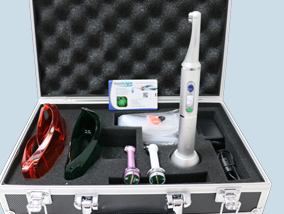
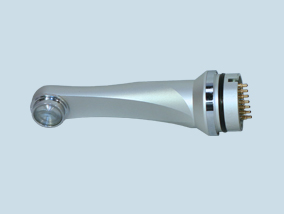
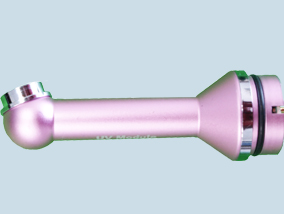
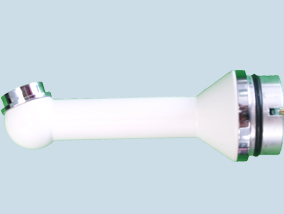
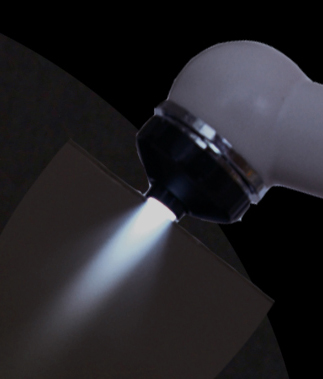

Fastest and most reliable curing light – FUSION5 and
- Two extra light heads: Violet and White light heads
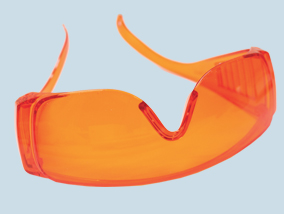
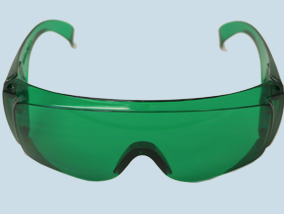
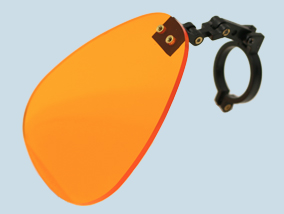
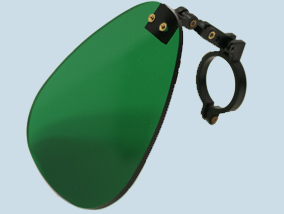
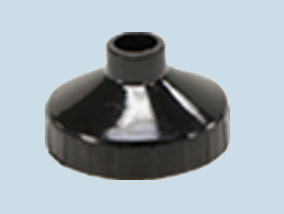
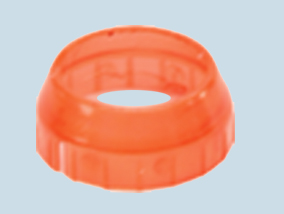
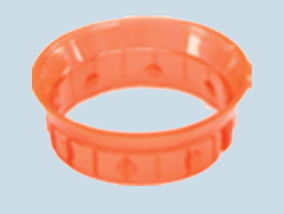
- Full accessories for fluorescent and transillumination oral exams
Oral health is all about early detection and prevention
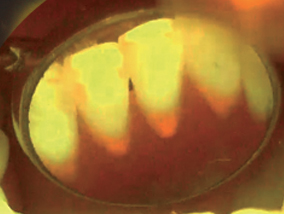
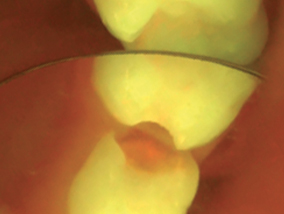
- Fluorescence and transillumination technology have been proven successful in identifying soft and hard tissue abnormalities.
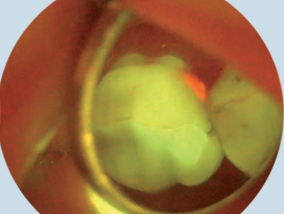
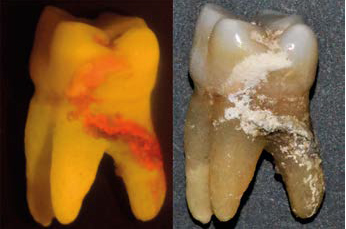
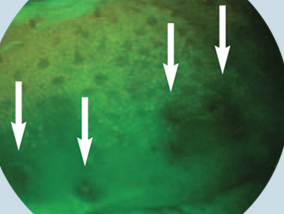
- DOE Oral Exam System provides dentists an X-ray vision to easily identify abnormal tissue that might develop into oral cancer or dental caries through the contrast of green healthy fluorescence and dark abnormal tissue.
- It is pleasant and fast with no need of rinsing the mouth.
DOE system uses high power LED illumination and high contrast switching filter for oral exam beyond normal visualization capabilities
- Small, Cordless, and Reliable
- Ease of access to detect unreacheable areas including the back throat
- No hair drier cooling fan noise
- Multi-wavellength LED illumination
- Always ready without sleeping mode
- Easy to document cases with office camera
You’ve got the POWER!!!
- Soft tissue lesion imaging
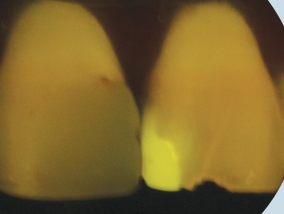
- Dental caries fluorescence and transillumination imaging
- Easy composite viewing and removal
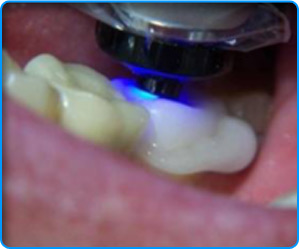
- Options to add on fast composite curing, light weight illumination, and hands-free composite removal system
CDT Procedure Code for exams: D0431: Adjunctive pre-diagnostic tests
A phenomenal company
From loupe lights and loupes to cameras and curing lights, DentLight is a phenomenal company that consistently develops products to meet dentists’ needs.
Dr. Howard Glazer, Fort Lee, NJ
Every dentist should be getting DOE.
DOE system is relatively inexpensive. Every dentist should be getting it.
Dr. Jeffrey Hoos

The most versatile on the market…
Fusion light system incorporates: white light – curing light – oral cancer detection light. It is truly the most versatile on the market… The transillumibation differentiates primary and secondary dentin, indispensable as you explore deeper into the root, hopefully avoiding the disappointment of a root ” perforation” and locating the pulp canal to gain access to the canal terminus at the apex.
Dr. James Malooley DDS, MSD

John Flucke’s Dental Technology Blog
I’m a big believer in oral cancer screening. By examining and finding cancer at its earliest stages, it allows us to give the patient the best chance to beat this disease. Early on in the development cycle of the Identafi device (way before it was part of DentalEZ) I was tinkering with the device. Cancer screening is something that every doctor and hygienist should be doing. Now with the market seeing multiple devices (Dentlight DOE, LED Dental Velscope Vx) and the Identafi, doctors have more choices in reliable devices than at any time in history.

Very pleased with its performance and with the increased visibility
Cancer screening is something that every doctor and hygienist should be doing. We have been very pleased with its performance and with the increased visibility it provides. While wearing the magnification and using the filters, tissue exposed to the violet light appears as a greenish color while potential areas of concern show up dark. The contrast is extremely good, which makes the exam process easier to perform.
Dr. John Flucke
The DOE system is a very good way to conduct a fast and non-invasive examination…
Adding to the value of Fusion curing light is the ability to conduct and oral cancer examination that will identify abnormal tissue warranting further investigation. The DOE kit comes with a snap-on head for the Fusion light as well as snap-on filters for your loupes.
I am a firm believer in and advocate for oral cancer prevention through early diagnosis and the DOE system is a very good way to conduct a fast and non-invasive examination of the oral cavity.
Dr. Howard Glazer
FUSION is a great all-around light for the dental office
The Fusion Light is one GREAT all-around light for the dental office. You get the benefits of three lights in one! Curing, Transillumination and Oral Cancer Screening. The Curing power is remarkable, the power of the white light attachment for caries and cracked tooth detection is great and the ability to use the DOE attachment for an enhanced oral tissue/cancer screening and evaluation makes this light the complete package!
John Comisi DDS., M.A.G.D., Medical University of South Carolina

Quick to implement…
The product was quick to implement.
Michelle M. Goodrow, RDH

As new technologies develop…
I’m sure as new technologies develop, they will be incorporated into this unit.
James Bowers, DDS
Pleasant and Fast
DOE makes the potentially life-saving examination pleasant and fast.
Dr. George Freedman, MARKHAM, ON, Canada
Easy to use on patients
It was easy to use on patients.
Hal Board, DDS
Clinical Evaluations from Dental Product Shopper
DOE SE received Recommended rating for its evaluations by nine independent dentists and hygienists with a total of 237 years of experience in dentistry.
Comparisons for: DOE Deluxe Kit
| Parameter | DOE | Velscope Vx | Identifi |
|---|---|---|---|
| Source Wavelength | Violet, White | Blue | Violet, White, Amber |
| Source | High Power LED | Multiple LEDs | Low Power LED |
| Cooling | Passive (no fan) | Active Fan (noisy) | Passive (no fan) |
| Illumination Intensity | High and Low | High | Low |
| Detection | Magnified High Contrast Filter with direct line of sight | High Contrast Filter with direct line of sight | Low Contrast Filter with indirect viewing via mirror |
| Image Quality | High | High | Low |
| Ambient Room Light | On or Off | Off | Off |
| Working Principles | Fluoresence (soft and hard tissue), transillumination (hard tissue), Magnification | Fluorescence (soft tissue) | Fluorescence and Reflectance (soft tissue) |
| Indications for use | Soft Tissue Lesions, dental caries and fractures, illumination, composite viewing/removal, magnification | Soft Tissue Lesions | Soft Tissue Lesions |
| Weight (grams) | 110 | 420 | 140 |
| Power Source | Rechargeable Li-Ion | Rechargeable Li-Ion | 2 AA batteries |
| Battery Run Time | 45 minutes | 12 minutes | 120 minutes |
| Battery Recharging Time | 90 minutes | 3 hours | Displace every morning |
| Construction | 22x195mm solid-metal wand | 22mm diameter, 88mm deep, 190mm high.Plastic handpiece | 250 mm long (handpiece) |
| Further Indications for Use | Fast Polymerization for Adhesives, Composite, Bonding Agents, Sealants | No | No/td> |
| Upgrade Options | Yes from FUSION | No | No |
| Documentation | Yes with standard office camera | Yes with add-on camera | No |
Clinical Techniques for: DOE Deluxe Kit
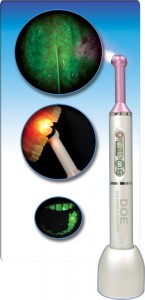
Non-contact flip-up filter
- Procedure
- Slip on flip-up filter handling tool. Switch filter position through the handling tool to avoid filter contact. Autoclave the handling tool after each use
- Results
- Avoid cross-contamination
Composite visual identification
- Procedure
- Use violet light to illuminate restoration areas together with magnified fluorescence filters to distinguish composite boundaries.
- Results
- Assist cleaning of residual or old composites for esthetics and better restorations.
Is Your Oral Cancer Screening Adequate?
By Clinicians Report® Dental Hygience January/February 2018, Volume 11 Issue 1
Optional adjunct screening devices, though not diagnostic, may make abnormal tissue more apparent at an earlier stage when it can be more successfully treated. CR is an independent, non-profit, dental education and product testing foundation, Clinicians Report®Filtering the Light
By Dr. John Flucke
We’ve put the device through its paces in my office for about 6 months now and have been very pleased with its performance and with the increased visibility it provides.Read more
What influenced the way you practiced in 2010?
By Ask Marty
The curing of composites was enhanced through the use of DentLight’s Fusion and Kerr Dental‘s Demi Plus. DentLight Fusion is a pen-grip-style curing light that has high output and can also be upgraded to a cancer detection aid. The Demi Plus continues the Dematron tradition with gun-style high-power curing. I am appreciating the faster curing and feeling better about the depth of cure from these lights. I also reduced the size of the headlight on my loupes with a smallRead moreIf oral cancers are diagnosed and treated early, they are eminently curable and the survival rate exceeds 80%
By Faizan Alawi, DDS
The combination of clinical surveillance with histological examination remains the current gold standard for oral cancer and precancer diagnosis.Never Do Just an “Oral Cancer” Exam!
By Dr. Scott Benjamin
The most important function of dental care is a thorough assessment and evaluation of the patient’s oral and related systemic health. An exam should never be focused on just one condition, and that includes cancer. One of the biggest mistakes that clinicians make is understating the true value of an oral screening for a multitude of conditions and over-hyping a single disease. The improper communication of these procedures has greatly reduced the perception of the significance and importance of theRead moreDOE Oral Exam System
By Dr. George Freedman
The scientific training of the dental practitioner is focused on diagnostic skill. While the clinical procedures that we perform are highly technical and often demanding, it is the detection of disease and the decision-making that precedes treatment that is truly the hallmark of the profession. Thus, the techniques and devices that assist us in becoming better diagnosticians are always welcome. DentLight has introduced the DOE Oral Exam System that helps dentists and hygienists to identify abnormal tissues that may otherwiseRead moreEarly Discovery, Assessment, and Diagnosis
By By Scott D. Benjamin, DDS
Some of dentistry’s most significant—and often overlooked—advances in recent years have been in the area of diagnostic technologies.Read moreWhy do I need DOE?
- The most important function of dental care is a thorough assessment and evaluation of the patient's oral and related health status. This includes dental caries that lead to cavity, decays under old composite, soft tissue problems such as cheek bite and worst of all, early signs of oral cancer.
-
DOE is a portable non-invasive dental oral exam system that addresses all of the above and more. It offers illumination to aid visualization during oral procedures and works as an adjunct to magnify and enhance the visualization of mucosal abnormalities, lesions, dental caries, fractures and endodontic canal orifice without the need of oral rinsing or switching off the room light.
-
DOE offers a win-win solution for both dentists and their patients. It helps patients avoid health problems that could be cost-prohibitive and even life-threatening at a later stage. It helps dentists, together with other modalities, to market their practice to deliver cost-effective yet profitable procedures to give their patients a piece of mind.
How does DOE work?
- Similar to the green fluorescence protein (GFP) that exhibits bright green fluorescence when exposed to blue light in jellyfish, numerous publications [Ref.] in the public domain have established the similar fluorescence in human soft tissue when excited under violet-blue wavelength light.

-
Fluorescence from jellyfish is easy to see due to its high quantum efficiency of close to 80% meaning 80% of the excitation light could be converted to the fluorescence emission. However, fluorescence from human soft tissue is much more difficult to observe due to not only lower quantum yield but also broader fluorescence emission.
-
DentLight is one of a few companies that achieved such feat in its capability to image soft tissue fluorescence with high resolution and high contrast. The patent-pending DOE design implements the most advanced technology in LED optics for long-range illumination to the back of the throat and high contrast fluorescence optical filters to maximize emission image contrast while suppressing both room and excitation light.Together with its award-winning modular design, DOE delivers to our customers the portable and reliable solutions for complete oral exam.
-
References:
-
1) De Veld DCG et al: The status of in vivo autofluorescence spectroscopy and imaging for oral oncology. Oral Oncol. 2005 Feb; 41(2): 117-31
-
2) Svistun E et al: Vision enhancement system for detection of oral cavity neoplasia based on autofluorescence. Head Neck. 2004 Mar; 26(3): 205-15
-
3) Utzinger U et al: Optimal visual perception and detection of oral cavity neoplasia. IEEE Trans Biomed Eng. 2003 Mar; 50(3): 396-9
-
4) Heintzelman DL et al: Optimal excitation wavelengths for in vivo detection of oral neoplasia using fluorescence spectroscopy. Photochem Photobiol 2000; (72)1: 103–113
-
5) Betz CS et al: Autofluorescence imaging and spectroscopy of normal and malignant mucosa in patients with head and neck cancer. Lasers Surg Med. 1999; 25(4): 323-34
-
6) Ingrams DR et al: Autofluorescence characteristics of oral mucosa. Head Neck 1997; (19)1: 27–32
-
7) Onizawa K et al: Fluorescence photography as a diagnostic method for oral cancer. Cancer Lett 1996; 108(1): 61–66
What are the differences between DOE and other brands?
- DOE is much smaller and portable than Velscope or Identifi enabling detection of back throat imaging which is a common place of problem.
- DOE has proven integrated rechargeable battery and smart electronics for constant ready exams without the need of changing battery (Identifi) or sleeping mode (Velscope).
- DOE delivers much higher power LED illumination than Identif similar to Velscope yet integrates passive cooling without the annoying fan noise and reliability headache in the long run.
- DOE implements patent-pending high contrast optical filter with much better extinction ratio than Identifi yet integrates with magnification loupes for both consistent high resolution imaging and suppression of room light while other brands need to turn off the ambient light.
- Best of all, DOE is modular and integrates components that can perform a lot more procedures than the other brands including in addition to soft tissue exam: 1) Composite viewing for old composite removal; 2) High-power and guided transillumination for dental caries, fractures, and root canal; 3) Intra-oral Illumination; 4) Bleaching; 5) Optional fast composite curing
- And what more, the price is right!
Is DOE just for “Oral Cancer” Exam and what if I give patients “False Positives”?
- DOE is a full oral health exam system not just aimed at screening oral cancer. One of the biggest mistakes that dentists make is over-hyping a single disease like oral cancer while not understating the true value of an oral screening for a multitude of health conditions. The improper communication of these procedures has greatly reduced the perception of the significance and importance of the oral exam.
- DOE is to discover any abnormality, no matter what it might be, from dental caries that lead to cavity, decays under old composite, soft tissue problems such as cheek bite and worst of all, early signs of oral cancer.
- No single device, such as DOE or X-ray machine for that matter, can deliver 100 percent accuracy or effectiveness in detecting conditions such as oral cancer. Detection and diagnosis is accomplished with the accumulation of data from multiple sources and modalities. DOE is an effective screening device for first level oral exams beyond the tip of the iceberg. Signals of problem, e.g., dark tissue with loss of fluorescence, should lead to further diagnosis including salivary diagnosis and oral pathology exams.
What is the difference between DOE and DOE SE?
- DOE SE is a custom version of DOE kit that primarily addresses oral cancer screening with a simple viewing and control system. DOE SE wand operates continuously for 1 minute with a single push of a run button. Fluorescence image is viewed through the custom Fluorescence Viewer similar to a standard face goggle. Due to the small size of the LED light and high optical illumination, DOE SE enables both intra and extra oral access which are critically important for the detecton of anterior and posterior regions of the oral cavity.
- DOE digital version has expanded capability to perform composite curing and bleaching.
| Location | Website | Distributor | Phone | |
|---|---|---|---|---|
New York | 55dental.com | Alpine Dental Inc. | (718) 972-4571 | |
California | amtouch.com | Am-Touch Dental | 661-294-1213 | |
Texas | archerdental.com/ | Archer Dental | 866-669-0211 | |
Georgia | atlantadental.com | Atlanta Dental Supply | 678-584-4884 | |
50 Locations | benco.com | Benco Dental Co. | 800 462-3626 | |
Washington | BurkhartDental.com | Burkhart Dental | 253-474-7761 | |
Nevada | burkhartdental.com | BURKHART DENTAL – Las Vegas | (702) 454-3599 | |
Texas | burkhartdental.com | Burkhart Dental – Dallas | 972-471-2727 | |
Idaho | burkhartdental.com | BURKHART DENTAL – ID | (208) 898-9575 | |
Oklahoma | burkhartdental.com | Burkhart Dental – OKC | (405) 948-7085 | |
Arizona | burkhartdental.com | BURKHART DENTAL – Phoenix | (602) 437-1701 | |
Oregon | burkhartdental.com | BURKHART DENTAL – Portland | (503) 252-9777 | |
Nevada | burkhartdental.com | Burkhart Dental – Reno | (253) 474-7761 | |
California | burkhartdental.com | BURKHART DENTAL – San Diego | (858) 694-5504 | |
Texas | burkhartdental.com | Burkhart Dental Supply – Houston | (281) 821-7000 | |
Texas | burkhartdental.com | Burkhart Dental Supply – Austin | 512-206-0401 | |
California | cejdental.com/ | CEJ DENTAL | (949) 493-2449 | |
47 Locations | darbydental.com | Darby Dental Inc. | 800-448-7323 | |
Maryland | dcdental.com | DC DENTAL | (877) 653-7500 | |
Michigan Wisconsin | dentalcity.com | Dental City | 800-353-9595 | |
8 Locations | dhpionline.com | Dental Health Products Inc. | 800-626-2163 | |
47 Locations | gacintl.com | GAC International | (800) 645-5530 | |
6 Locations | goetzedental.com | Goetze Dental | 800 692-0804 | |
New York | sullivanschein.com | Henry Schein | 800-372-4346 | |
Michigan | henryschein.com | Henry-Schein Dental – Grand Rapids, MI | (616) 299-4757 | |
Indiana | henryschein.com | Henry-Schein Dental – INDY | 800-472-4346 | |
50 Locations | henryschein.com | Henry-Schein Dental – RENO | 800-472-4346 | |
California | henryschein.com | Henry-Schein Dental – San Diego, CA | (858) 625-0019 | |
Tennessee | henryschein.com | Henry-Schein Dental- Nashville-TN | (615) 516-2903 | |
New Jersey | iqdentalsupply.com | IQ Dental Supply, LLC | 888-303-1115 | |
California | ismiledp.com | iSmile Dental Products Inc | (888) 745-4737 | |
New Jersey New York | jerseydentalsupplies.com | Jersey Dental Supplies | 732-994-5688 | |
Illinois Indiana Michigan | midwaydental.com | Midway Dental | (574) 784-2533 | |
Oklahoma Texas | midwestdental.com | Midwest Dental Equip | 940-322-4592 | |
| ken@mydentaltek.com | My Dental Tek | (239)284-5981 | ||
Tennessee | nashvilledental.com | Nashville Dental Inc | (615) 868-3911 | |
New Mexico | pattersondental.com | Patterson – Albuquerque, NM | (505) 884-6747 | |
Michigan | pattersondental.com | Patterson – AUBURN HILLS, MI | (248) 475-8700 | |
Idaho | pattersondental.com | Patterson – Boise, ID | (208) 375-7341 | |
Arkansas | pattersondental.com | Patterson – Bryant, AR | (501) 847-6696 | |
Ohio | pattersondental.com | Patterson – COLUMBUS OH | (614) 791-9141 | |
California | pattersondental.com | Patterson – El Segundo, CA | (310) 426-3100 | |
Florida | pattersondental.com | Patterson – Ft. Lauderdale, FL | (954) 717-1206 | |
Hawaii | pattersondental.com | Patterson – Hawaii | (808) 682-3875 | |
Indiana | pattersondental.com | Patterson – Indianapolis, IN | 317-733-4900 | |
Nevada | pattersondental.com | Patterson – LAS VEGAS, NV | (702) 731-4267 | |
Tennessee | pattersondental.com | Patterson – NASHVILLE, TN | (615) 884-2060 | |
Utah | pattersondental.com | Patterson – Salt Lake, UT | (801) 467-1119 | |
California | pattersondental.com | Patterson – San Diego, CA | (858) 678-3200 | |
Louisiana | pattersondental.com | Patterson – Shreveport, LA | (318) 797-6010 | |
Washington | pattersondental.com | Patterson – SPOKANE, WA | (509) 838-8581 | |
Missouri | pattersondental.com | Patterson – Springfield MO | (417) 865-9222 | |
California | pattersondental.com | Patterson – Sunnyvale, CA | (408) 773-0776 | |
Florida | pattersondental.com | Patterson – TAMPA, FL | (813) 744-2900 | |
Tennessee | pattersondental.com | Patterson -Knoxville, TN | 865 218 1310 | |
Nebraska | pattersondental.com | Patterson -LaVista NE | (402) 734-6655 | |
Alabama | pattersondental.com | Patterson -PELHAM, AL | (205) 985-0126 | |
Kansas | pattersondental.com | Patterson -Wichita, KS | (316) 315-1800 | |
Missouri | pattersondental.com | Patterson Dental – Hazelwood | 314-595-1300 | |
Colorado | pattersondental.com | Patterson Dental – AURORA | (303) 393-1081 | |
South Carolina | pattersondental.com | Patterson Dental – Blythewood | 803-691-2202 | |
Iowa | pattersondental.com | Patterson Dental – Boone | 515-433-1700 | |
Minnesota | pattersondental.com | Patterson Dental – Central | 800 328-5536 | |
Iowa | pattersondental.com | Patterson Dental – Des Moines | (515) 254-1700 | |
California | pattersondental.com | Patterson Dental – Dinuba | 559-595-1450 | |
North Dakoda | pattersondental.com | Patterson Dental – Fargo | (701) 235-7387 | |
Texas | pattersondental.com | Patterson Dental – Fort Worth | 817-837-2700 | |
Washington | pattersondental.com | Patterson Dental – Kent | 253-850-4200 | |
Kansas | pattersondental.com | Patterson Dental – Lenexa | (913) 492-6100 | |
Pennsylvania | pattersondental.com | Patterson Dental – Mount Joy | 717-653-3060 | |
Wisconsin | pattersondental.com | Patterson Dental – PEWAUKEE | (262) 408-4100 | |
Indiana | pattersondental.com | Patterson Dental – South Bend | 574-289-8485 | |
Illinois | pattersondental.com | Patterson Dental Supply – Chicago | (630) 616-8202 | |
Texas | pattersondental.com | Patterson Dental Supply – Houston | (832) 590-5000 | |
Texas | pattersondental.com | Patterson Dental Supply – Round Rock | (512) 218-5200 | |
Texas | pattersondental.com | Patterson Dental Supply – San Antonio | (210) 256-5424 | |
Oklahoma | pattersondental.com | Patterson Dental Supply – Tulsa | (918) 627-1195 | |
Texas | pattersondental.com | Patterson Dental Supply INC – S. Lake | (817) 305-4200 | |
Florida | pattersondental.com | Patterson Dental- Jacksonville | 904-741-4480 | |
6 Locations | pearsondental.com | Pearson Dental Supply | 800 535-4535 | |
Wisconsin | poppdentalsupply.com | Popp Dental Supply LLC | 414 421 3368 | |
North Carolina | practicon.com | Practicon | 800-959-9505 | |
Illinois | safcodental.com | Safco Dental Supply Co. | (847) 412-9331 | |
Washington | scottsdental.com | Scott’s Dental | 253 858 9474 | |
California | SF DENTAL SUPPLY LLC | 650-755-4888 | ||
California | shastadentalsupply.com | Shasta Dental Supply | 800 554-6394 | |
California | tdsc.com | The Dentists Supply Company | 800-562-6645 | |
California | tricountydental.com | Tri County Dental Supply , Inc. | 877-767-8237 | |
Connecticut Michigan New Jersey | tristatedental.com | Tri-State Dental Supplies, Inc. | (800) 378-7754 |